 |
| These are books the 5th graders have read so far |
Showing posts with label point of view. Show all posts
Showing posts with label point of view. Show all posts
Friday, October 12, 2012
Point of View
The new Common Core standards are quite challenging when it comes to teaching point of view. I haven't had to teach the difference between first and third person point of view to fourth and fifth graders before. After reading a story and determining its point of view together, we have been adding it to this poster in our room.
We've also started ELA notebooking and I'm finding that very exciting. I will take some pictures of our notebooks and put together a post about that. One page in our notebook matches the point of view poster above. Christine


Wednesday, April 13, 2011
Teaching point of view
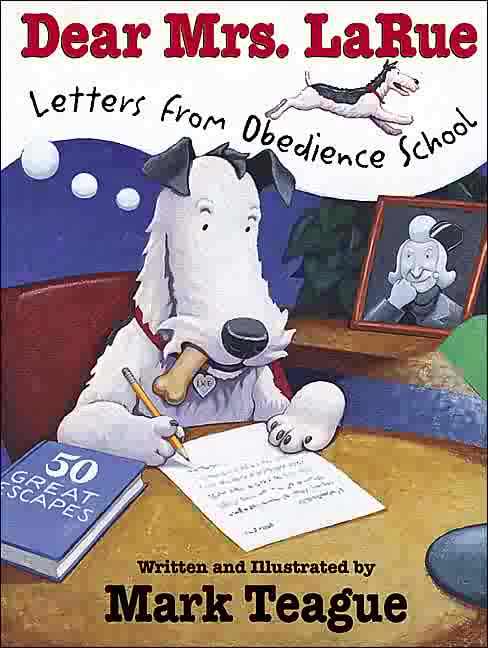
The LaRue series by Mark Teague is great for teaching children about point of view. The humorous stories are told in a series of letters from Ike, the dog, to his owner Mrs. LaRue. If the children miss the clues in the text that let us infer that Ike isn't really telling the truth, the picture clues are excellent. The illustrator used both black and white in the divided page format to show us what is true (in color) and what is false (in black and white).


 These books are also great to use in lessons on persuasive writing or for teaching voice to elementary age children. Here is a link to a PowerPoint of Ike's letters and some other teaching ideas. http://www.docstoc.com/docs/25479903/Dear-Mrs-LaRue-Letters-from-Obedience-School
Christine
 |
| Notice the use of black and white to explain Ike's point of view. |


Christine
Friday, August 6, 2010
culture/customs

What is culture? What are customs? Nim and the War Effort by Milly Lee is a great book to help children understand what it is like to grow up in another culture. I have the students look for text based evidence of Chinese culture under these three categories:
- mealtimes and food
- language
- other customs
You can also use Nim and the War Effort to teach theme and conflict.

Another great picture book choice when you explore the concept of culture/customs is Encounter by Jane Yolen. This book is about a Taino indian boy who meets Columbus. It fits in nicely with my 5th grade American History curriculum but I also like it because it is told from a different point of view. Elementary grade children are so familiar with the story of Columbus. This book turns that story on its head. It really helps children think about what they are reading. Christine
Tuesday, July 20, 2010
teaching point of view

While reading Elsewhere by Gabrielle Zevin (adolescent fiction) I got lost in the text. The story is about a teen who just died in a car crash. It opens with the thoughts of her (brother???) At the end of the first chapter I had that ahah! moment. The narrator was not her brother, it was her DOG! Of course as an adult reader I had to go back in the text and find out where I went off track. Did the author give me clues that I just outright missed? The kids I teach wouldn't think critically like I would at this moment. They would feel lost and confused, then bored, and then they would give up on the book entirely. When we do the MCAS release question Mrs. Frizby and the Rats of Nimh many times the chidren are unable to tell that the speaker is a rat. If you can't determine who is speaking, comprehension breaks down. How do you teach children to identify when a story is being told by a different point of view? Start with picture books. I love Anthony Browne's book Voices In The Park. It is the simple story of a day in the park told from four points of view. The characters all tell the same story but they tell it differently. I also use the Dear Mrs. Larue series by Mark Teague. Both stories have funny pictures to support young readers as they learn about a new concept such as point of view. The Pain and the Great One by Judy Blume and Tight Times by Barbara Shook Hazen are also good stories to use.Throughout the year, when I use my narrative elements glove, I try to tackle point of view. Later on in the year after reading Shiloh by Phillis Reynolds Naylor I have the children write a summary from the dog's point of view instead of the narrator, Marty Preston. Its important that children realize that a story can be told by one person, many different people, an animal or a non living thing such as a house or a tree. As an adult reader I know that point of view is a literary technique authors use, children need to be taught to think like that.Students need lots of experience identifying the narrator and understanding from whose perspective the story is being told. They need to be shown how to identify the clues in the text that show the reader who is speaking. Those ahah! moments are teaching moments so be sure to reread and discuss that its the dog or the rat or the tree that is in charge of telling us this story this time. Christine
Subscribe to:
Posts (Atom)